
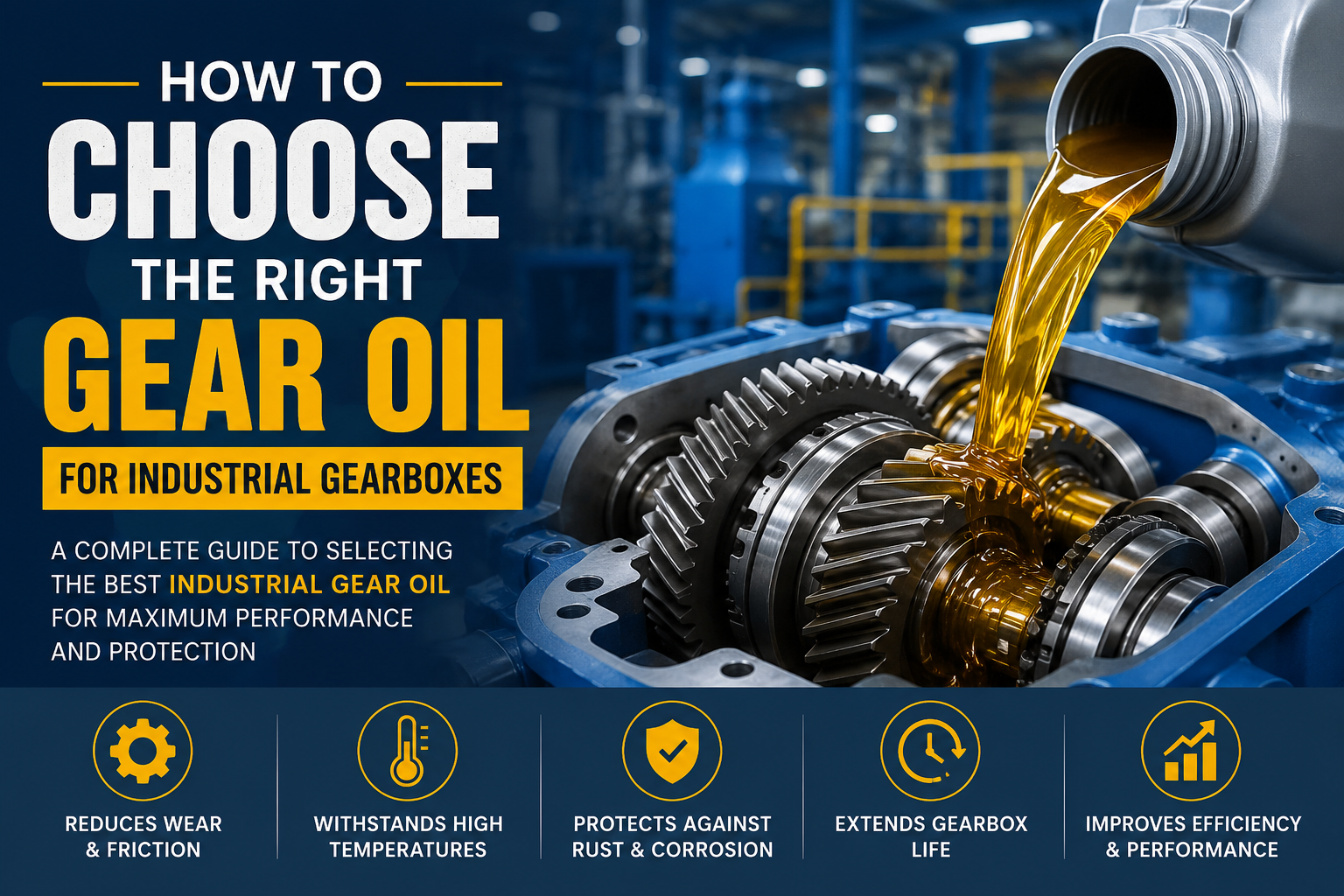
Selecting the right industrial gear oil is essential for maintaining gearbox efficiency, reducing wear, and extending equipment life. Industrial gearboxes operate under heavy loads, high temperatures, and demanding conditions, making proper lubrication critical for reliable performance.
With numerous options available, including 75W90 gear oil, 80W90 gear oil, GL4 gear oil, ISO 150 gear oil, ISO 320 gear oil, and synthetic gear oil, choosing the right lubricant can seem challenging. This guide explains the key factors to consider when selecting the best gear oil for your industrial gearbox.
Why Gear Oil Matters in Industrial Gearboxes
A high-quality gear oil forms a protective film between moving gear surfaces. This lubrication reduces friction, minimizes wear, prevents corrosion, and helps dissipate heat generated during operation.
Using the correct gear lubricant can provide:
- Longer gearbox life
- Reduced maintenance costs
- Improved energy efficiency
- Better protection against wear and pitting
- Reduced downtime
Choosing the wrong gear box oil can lead to overheating, excessive wear, and costly equipment failures.
Understanding Gear Oil Viscosity Grades
One of the most important factors when selecting industrial gear oil is viscosity.
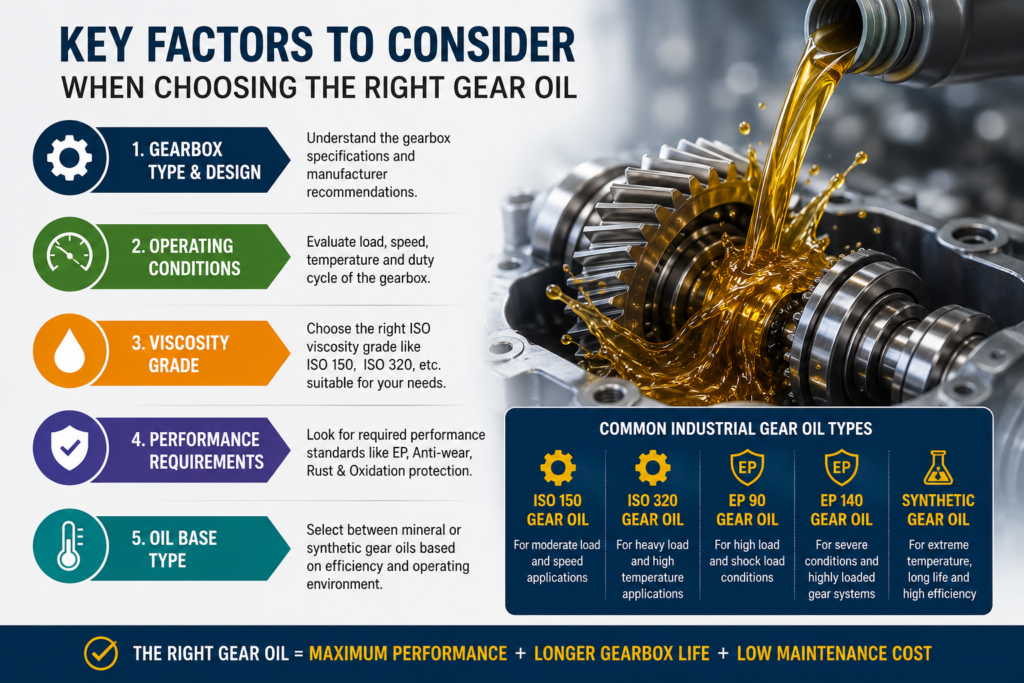
ISO 150 Gear Oil
ISO 150 gear oil is suitable for gearboxes operating under moderate loads and speeds. It provides excellent lubrication while maintaining efficient energy consumption.
Common applications include:
- Conveyor systems
- Packaging machinery
- Light-to-medium industrial gearboxes
ISO 320 Gear Oil
ISO 320 gear oil is designed for heavy-duty gearboxes operating under higher loads and temperatures.
Common applications include:
- Cement plants
- Mining equipment
- Steel manufacturing machinery
- Heavy industrial gear systems
Many industrial users refer to this product simply as 320 gear oil.
Consider Operating Conditions
Before selecting a lubricant, evaluate the gearbox operating environment.
Load Conditions
Heavy loads require oils with enhanced protection capabilities such as EP 320 gear oil and EP90 gear oil.
Temperature
High operating temperatures may require synthetic gear oil because it offers superior thermal stability and oxidation resistance.
Speed
High-speed gearboxes often require lower-viscosity oils, while slower heavily loaded gear systems benefit from higher-viscosity lubricants.
Understanding EP Gear Oils
EP stands for Extreme Pressure.
EP additives protect gear teeth from metal-to-metal contact during high-load operation.
EP90 Gear Oil
EP90 gear oil is commonly used where moderate to heavy load protection is required.
Benefits include:
- Excellent anti-wear protection
- Good load-carrying capability
- Reliable gearbox performance
EP140 Gear Oil
EP140 gear oil provides a thicker lubricating film and is ideal for heavily loaded equipment operating in severe conditions.
EP 320 Gear Oil
EP 320 gear oil combines high viscosity with extreme pressure protection, making it a preferred choice for many industrial gearboxes.
Synthetic Gear Oil vs Mineral Gear Oil
Many industrial operators ask whether synthetic gear oil is worth the additional investment.
Benefits of Synthetic Gear Oil
- Better thermal stability
- Longer oil life
- Improved oxidation resistance
- Better performance in extreme temperatures
- Reduced maintenance intervals
Although synthetic lubricants typically cost more upfront, they often reduce overall operating costs through improved equipment protection.
Check OEM Recommendations
Always consult the gearbox manufacturer’s recommendations before selecting a lubricant.
Manufacturers typically specify:
- Required viscosity grade
- Performance standards
- Oil type
- Change intervals
Following OEM guidelines helps ensure optimal gearbox performance and warranty compliance.
How to Identify the Best Gear Oil
The best gear oil depends on your specific operating conditions.
When evaluating products, consider:
- Viscosity requirements
- Load conditions
- Operating temperature
- Equipment type
- Oil quality certifications
High-quality industrial gear oil should provide excellent wear protection, oxidation resistance, and load-carrying capacity.
Factors Affecting Gear Oil Price
The gear oil price varies based on:
- Base oil quality
- Viscosity grade
- Additive technology
- Synthetic or mineral formulation
- Brand reputation
While lower-priced products may seem attractive, premium lubricants often deliver better long-term value through reduced maintenance and equipment downtime.
Where to Buy Quality Gear Oil
If you are searching for gear oil near me, choose a trusted supplier that offers genuine industrial lubricants and expert technical guidance.
Working with a reliable supplier ensures you receive the correct product for your application and operating conditions.
Related Articles
For more lubrication insights, you may also find these guides helpful:
- What is Gear Oil? Types, Uses & Benefits Explained
- Complete Guide to Hydraulic Oil Selection
- Cutting Oil Applications in Manufacturing Industries
- Industrial Grease Selection Guide
- Common Causes of Gearbox Failure and How to Prevent Them
Conclusion
Selecting the right industrial gear oil is critical for maximizing gearbox performance and equipment life. Whether you need ISO 150 gear oil, ISO 320 gear oil, EP90 gear oil, EP140 gear oil, EP 320 gear oil, or synthetic gear oil, understanding your operating conditions will help you choose the most effective solution.
Proper lubrication not only protects valuable equipment but also improves efficiency, reduces maintenance costs, and minimizes downtime.
Frequently Asked Questions
What is the best gear oil for industrial gearboxes?
The best gear oil depends on load, speed, temperature, and manufacturer recommendations. ISO 150 and ISO 320 grades are commonly used in industrial applications.
What is the difference between ISO 150 and ISO 320 gear oil?
ISO 320 gear oil is thicker and generally used for heavier loads, while ISO 150 gear oil is suitable for moderate operating conditions.
Is synthetic gear oil better than mineral gear oil?
Synthetic gear oil typically offers better thermal stability, longer service life, and improved protection under demanding conditions.
When should gear oil be changed?
Oil change intervals vary depending on operating conditions and manufacturer recommendations. Regular oil analysis can help determine optimal replacement schedules.
Can EP gear oils be used in industrial gearboxes?
Yes. Products such as EP90 gear oil, EP140 gear oil, and EP 320 gear oil are specifically designed to provide enhanced protection in high-load industrial gear applications.
Read More:
About Saraswati Oil Emporium
📞 Contact Us
Looking for high-quality industrial lubricants and gear oils?
Saraswati Oil Emporium offers reliable solutions in industrial oils and lubricants, including gear oils, hydraulic oils, cutting oils, grease, and specialty lubricants for various industries.
📱 Call Now: 9667173888 / 9811178851
🌐 Website: saraswatioil.com
📧 Email: info@saraswatioil.com
